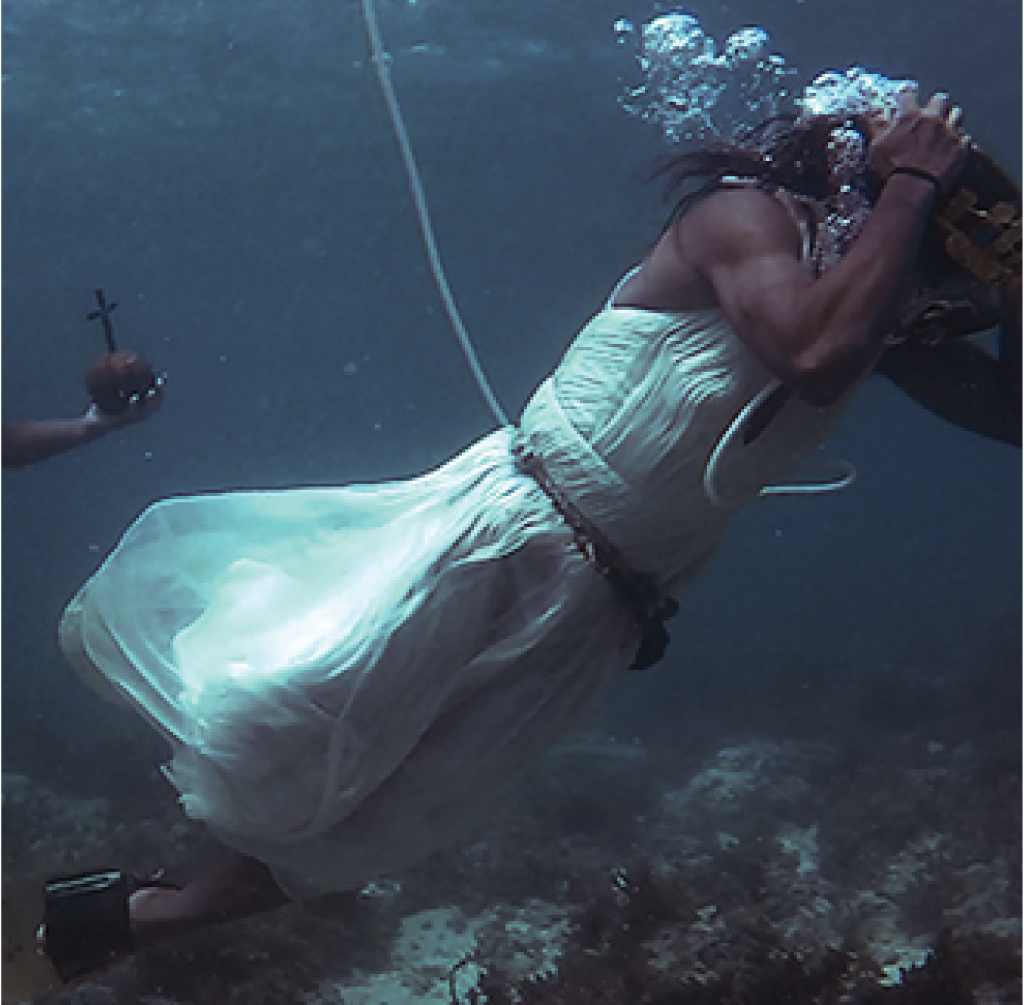
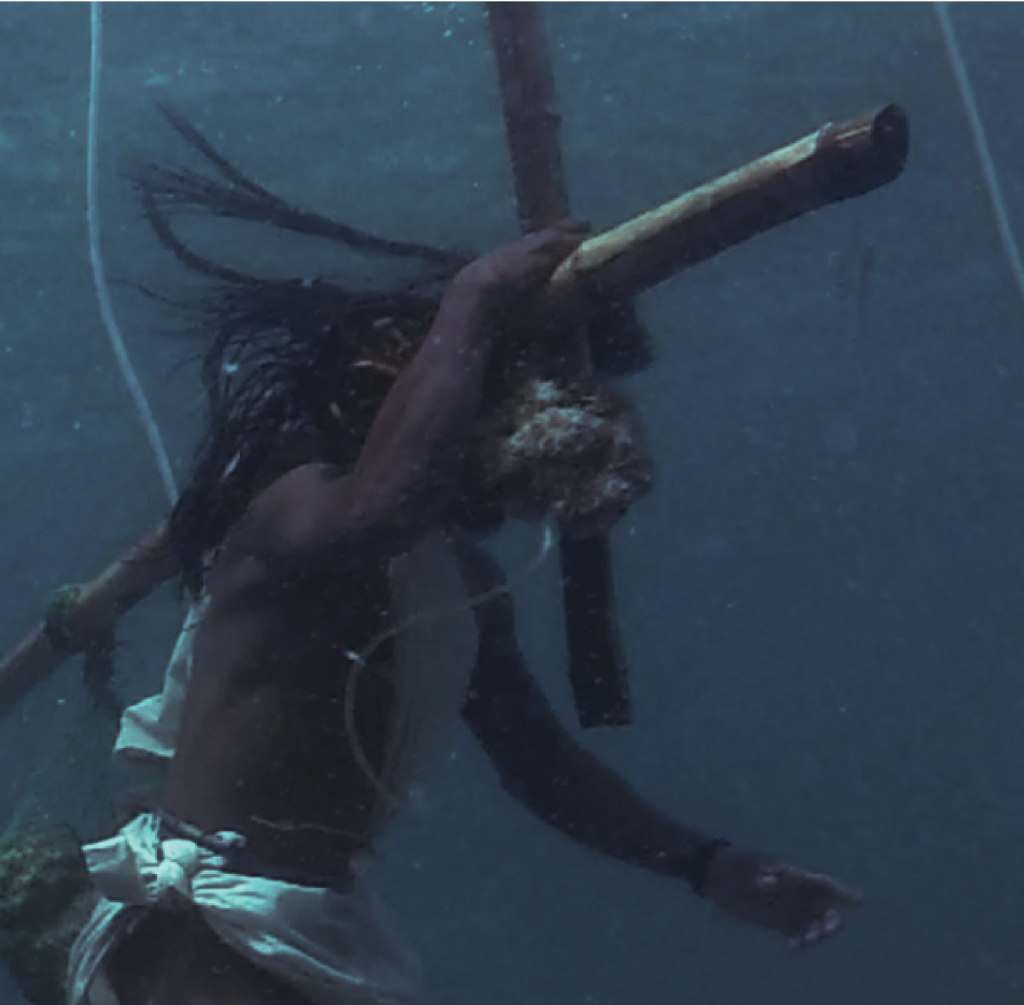
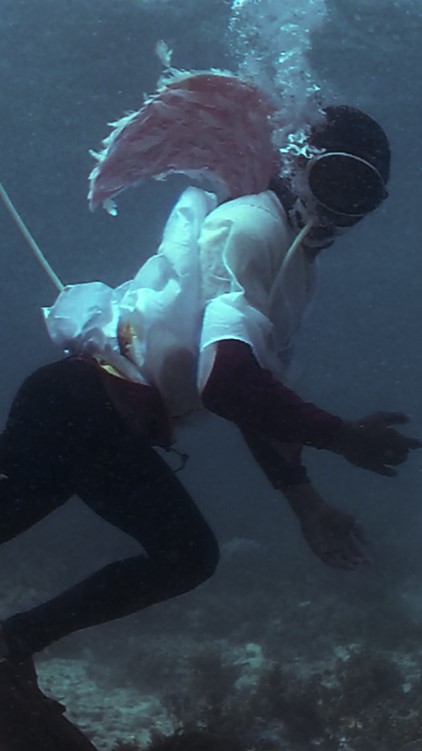
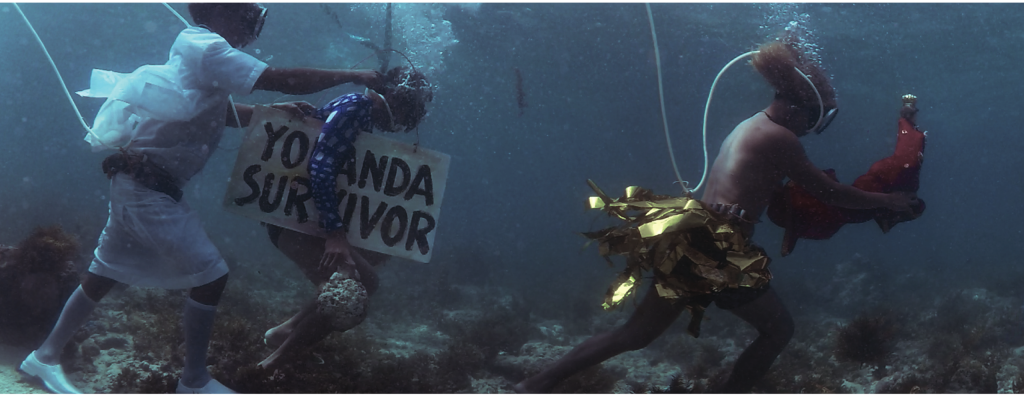
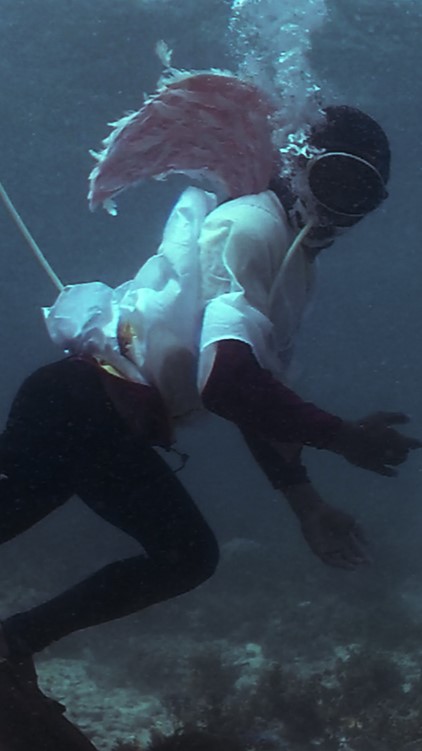
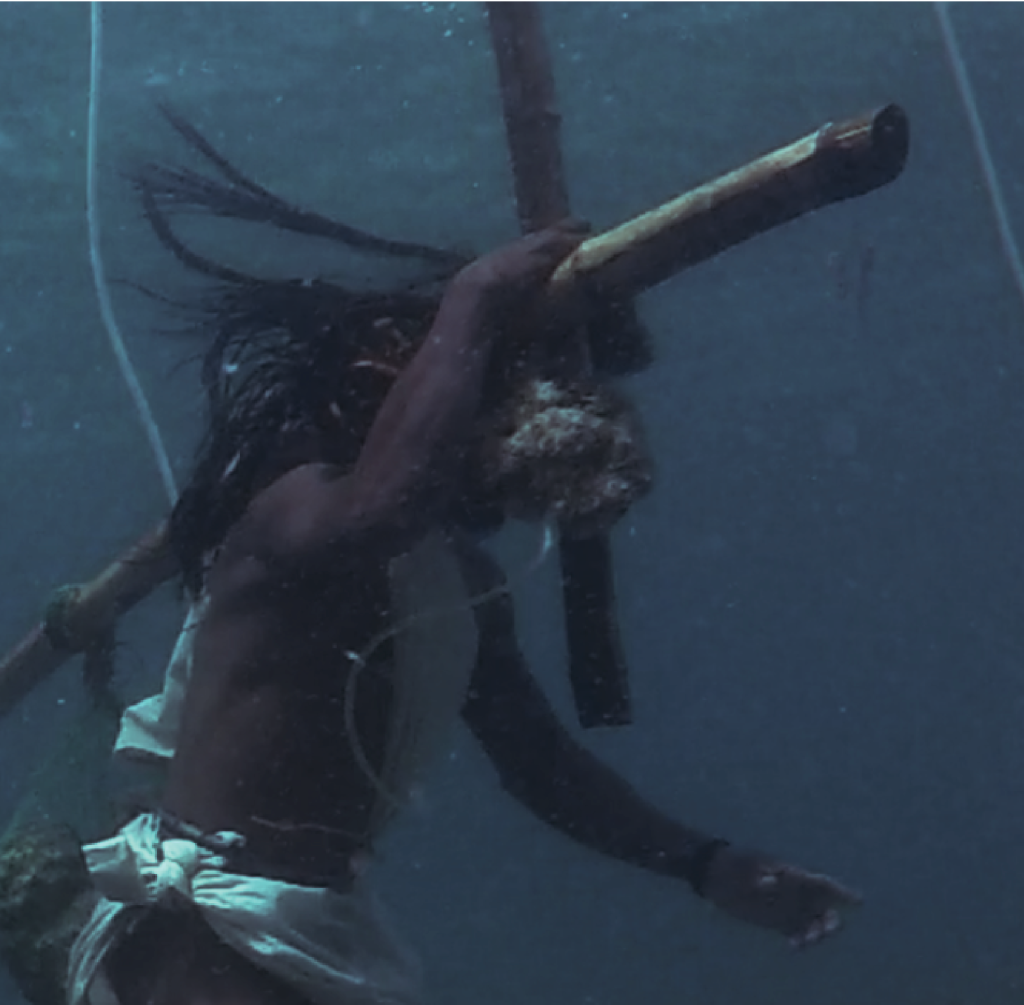
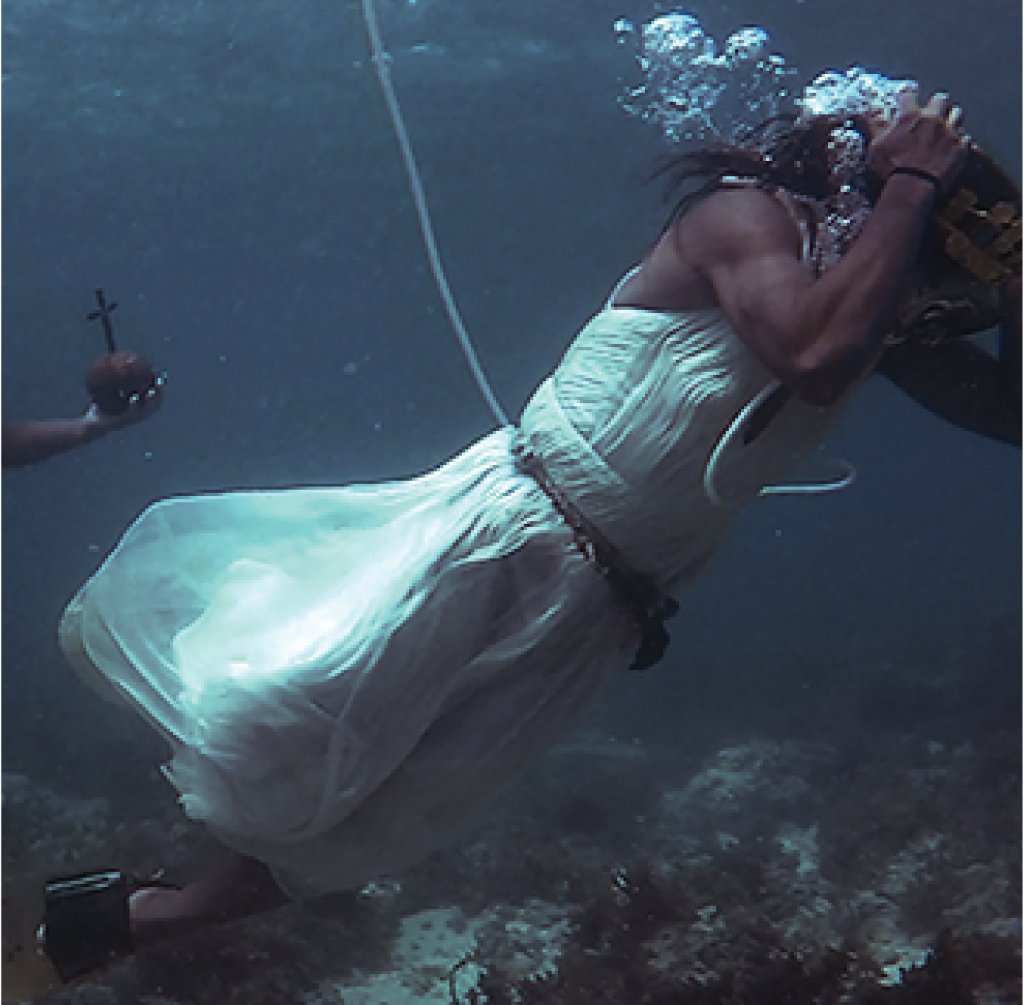
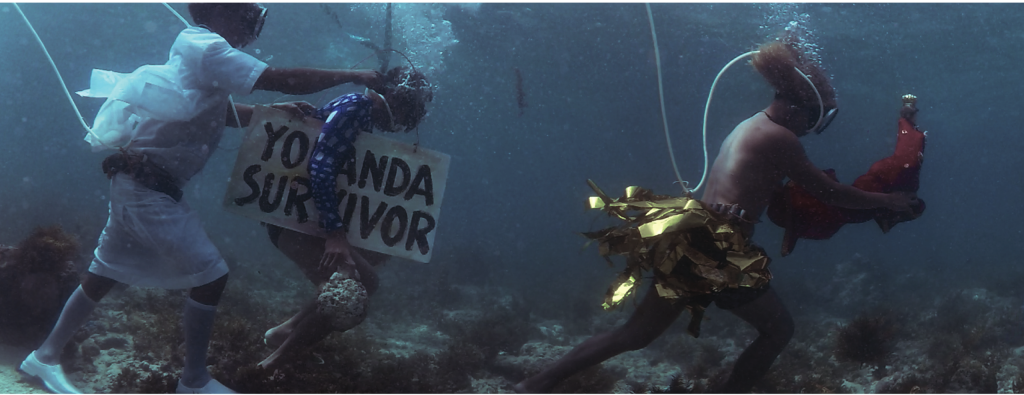
The spectacle found in one of the Philippines’ oldest festivals called the Ati Atihan is one that seems to drown in its own strangeness. It is performed, through lavish procession, in honor of a child saint, supposedly the infant Jesus, yet remains hounded by heathen imagery: cross dressing males, dancers painted in black, and a slew of impresarios and impostors. It owes its nebulous nature from the abrupt sanctification of a once pagan and animist culture that underwent colonization during the 16th century. The observance of this age old festival continues to this day and has thrived more extravagantly in certain parts of the archipelago. In Bantayan Island, for instance, where the artist Martha Atienza hails from, the Ati Atihan has been an annual display of rascality where the community, who are mostly fisherfolks, revel, and which she has been documenting since 2010.